CDL Passenger Endorsement: How to Get Certified and Meet Training Requirements
Getting a Commercial Driver's License (CDL) with a passenger endorsement lets you legally transport people and widens the kinds of jobs you can take. This guide walks you through who’s eligible, what training and medical checks you’ll need, how testing works, and how state rules can change the process. Read on and you’ll have a clear plan to earn and keep your passenger endorsement.
What Are the CDL Passenger Endorsement Requirements?
To add a passenger endorsement to your CDL, you must meet federal standards from the Federal Motor Carrier Safety Administration (FMCSA) plus any extra rules your state sets. Together, these requirements make sure drivers have the skills and fitness to move people safely.
Who Is Eligible for a CDL Passenger Endorsement?
Eligibility typically depends on age, driving history, and medical fitness. You must be at least 18 to drive within a single state (intrastate) and 21 to drive across state lines (interstate). A clean driving record helps — some states run background checks — and prior experience with larger vehicles is often helpful.
What Age and Medical Qualifications Are Needed?
Age rules are usually 18 for intrastate and 21 for interstate driving. You’ll also need to pass a Department of Transportation (DOT) medical exam to confirm you’re physically and mentally fit to operate a commercial passenger vehicle. Vision checks are part of that exam to ensure you meet minimum eyesight standards.
How to Get a CDL Passenger Endorsement: Step-by-Step Process
Getting the endorsement usually follows a predictable path: confirm eligibility, complete required training, study the handbook, pass the written knowledge test, and pass the practical (road) exam. Knowing each step ahead of time makes the process smoother.
What Training Is Required for the Passenger Endorsement?
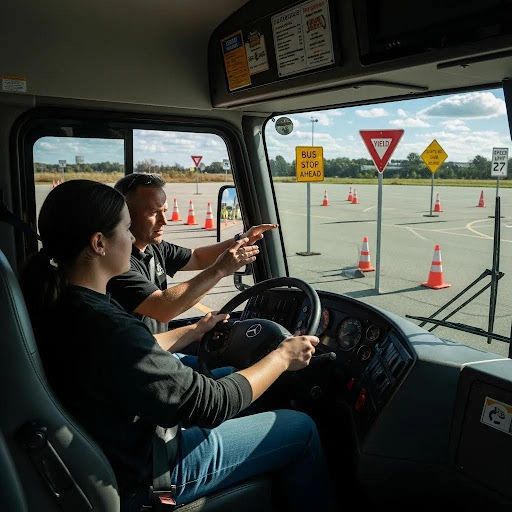
Passenger endorsement training usually combines classroom lessons with behind-the-wheel practice. Courses cover passenger safety, vehicle operation, emergency procedures, and passenger management. Training length varies by state and provider — there’s no single federal minimum for hours.
How to Pass the CDL Passenger Endorsement Test Successfully
Pass the test by studying the state CDL manual, practicing with sample questions, and getting hands-on driving time. The endorsement test typically includes a written knowledge portion and a road skills component — practice both. Use practice tests and study guides to identify weak spots and focus your preparation.
What Does the CDL Passenger Endorsement Training Course Include?
A passenger endorsement course teaches the skills and knowledge needed to transport people safely. Typical topics align with FMCSA guidance and state rules, and include both classroom instruction and practical driving practice.
How Does Online Traffic Safety’s Online Course Meet FMCSA Standards?
Online Traffic Safety offers a passenger endorsement course built to meet FMCSA-aligned training objectives. The course covers the core topics you need for both the written and practical exams and is arranged so you can learn at your own pace while still meeting regulatory expectations.
What Are the Benefits of Taking the Passenger Endorsement Online Course?
Online training gives you schedule flexibility and often lowers costs compared with classroom-only programs. You can study on your own time, revisit lessons as needed, and access a library of resources to support test prep and behind-the-wheel practice.
How Do State-Specific Regulations Affect the CDL Passenger Endorsement?
States can add requirements on top of federal rules. That means training hours, testing steps, or documentation can differ depending on where you apply. Always check your state’s DMV rules before you enroll in a course or schedule tests.
Which States Have Unique Passenger Endorsement Requirements?
Some states have stricter standards or extra training requirements — for example, California and New York are known for more detailed rules. Because requirements change, verify your state’s specific steps and any additional testing or training before you start.
How to Navigate State Variations in Testing and Licensing
To handle state differences, contact your local Department of Motor Vehicles (DMV) or licensing agency for the latest rules. Local driving schools are also a good resource — they’ll know the practical steps and common pitfalls in your area.
What Are the Renewal Procedures and Fees for the Passenger Endorsement?
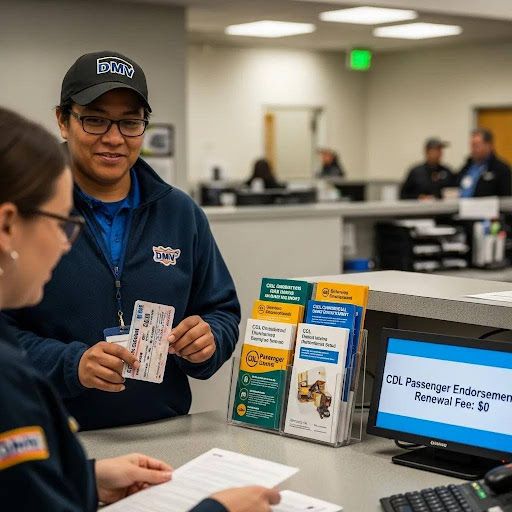
Keeping your passenger endorsement current means following your state’s renewal process and paying any required fees. Renewal timelines and costs vary, so mark your calendar and check local rules before your endorsement or CDL expires.
How Often Must You Renew the CDL Passenger Endorsement?
Endorsement renewal usually happens when you renew your CDL. That cycle commonly ranges from every four to eight years depending on your state. Staying aware of your renewal date prevents lapses in your certification.
What Are the Typical Costs Associated with Renewal?
Renewal fees differ by state and any extra testing required. Typical costs fall roughly between $20 and $100. For the most accurate fees and steps, check with your state DMV.
Where Can You Find Practice Tests and FAQs for the CDL Passenger Endorsement?
There are many resources to help you prepare: official state manuals, online practice tests, study guides, videos, and training programs. Using a mix of study tools and hands-on practice will give you the best chance to pass.
How Do Practice Tests Help Prepare for the Endorsement Exam?
Practice tests familiarize you with question formats, highlight topics you need to review, and build confidence before test day. Combine them with hands-on driving practice for the best results.
Frequently Asked Questions
What types of vehicles require a CDL passenger endorsement?
About the Author
John M. Reynolds is a transportation safety expert with over 15 years of experience in commercial driver training and regulatory compliance. He has worked extensively with state DMVs and private training providers to develop effective CDL endorsement programs. John holds certifications in driver education and is a frequent contributor to industry publications focused on commercial vehicle safety and driver preparedness.
Who we are
Featured links
Get in touch
-
info@onlinetrafficsafety.com
Connect with us
-
Facebook
-
Twitter
-
Youtube
-
Instagram
-
Linkedin
-
TikTok