Complete Guide to Passing the NY DMV Permit Test: How to Get Your New York Learner’s Permit
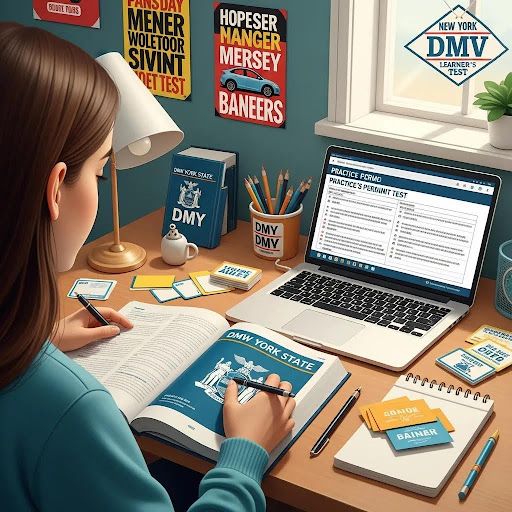
Getting your New York learner’s permit is the first step toward independent driving. The process centers on applying, meeting ID and vision requirements, and passing a written knowledge test. This guide walks you through eligibility, the MV-44 application, study strategies, testing options (in-person and online), and the steps after you get your permit that lead to a full license. You’ll learn what the NY DMV tests—road signs, traffic laws, and safe-driving rules—how to use the New York State Driver’s Manual effectively, and where practice tests fit into your study plan. We also include concise checklists and comparison tables that mirror the test format to boost your chances of passing the first time. If you prefer structured prep, Online Traffic Safety offers a Permit Preparation Course and Driver Test Prep tools with narrated lessons, interactive modules, and practice tests built to reflect NY DMV question formats while staying self-paced and student-focused.
What Are the Requirements for the NY Learner’s Permit Test?
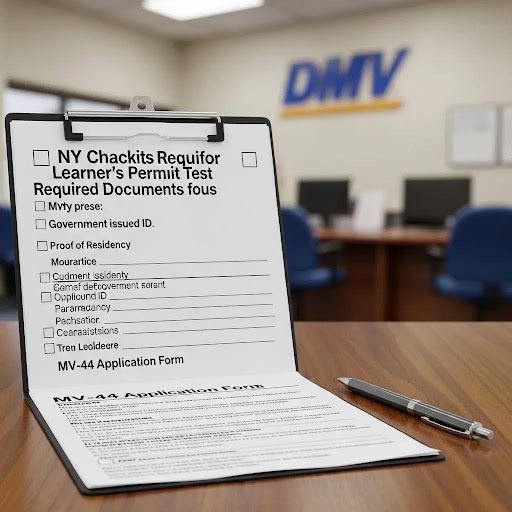
The NY learner’s permit process outlines who can apply, which documents you must bring, and the on-site checks—like a vision screening and fee payment—you’ll face at the DMV. You must prove your identity, date of birth, and lawful presence, complete the MV-44 application, and pass a vision test before taking the written exam. Knowing these requirements ahead of time prevents delays and common rejections at the DMV counter. The next sections break eligibility and paperwork down into practical, easy-to-follow items so you can arrive ready.
Who Is Eligible to Take the New York Learner’s Permit Test?
Eligibility depends on age and whether you’re applying for a junior (provisional) permit or a standard adult permit. Most 16-year-olds can apply for a junior permit with parental consent and supervised driving requirements; older applicants follow the adult pathway. Special cases and exemptions are handled per NY DMV rules, so check requirements for any unique circumstances. Confirm any residency or training prerequisites before you schedule your test—age affects provisional restrictions and supervised driving rules, so choosing the right application route up front saves time.
What Documents Do You Need for the NY Permit Test?
Bring primary and supporting ID, proof of New York residency, and Social Security verification if required so the DMV can process your MV-44 and issue your permit without a hitch. Acceptable documents typically include a government-issued photo ID, birth certificate or other lawful-presence proof, two different residency documents (like a utility bill or bank statement), and Social Security paperwork when applicable. Always bring originals or certified copies to avoid rejection. Filling out the MV-44 accurately and organizing your documents ahead of time makes the visit faster and reduces the chance of being turned away.
How Do You Apply for a New York Driver’s Permit?
- Gather primary and supporting identity documents, proof of NY residency, and Social Security evidence if required.
- Fill out the MV-44 form accurately, including your full legal name, date of birth, and required signatures.
- Bring your documents to the DMV, complete the vision test, pay the fees, and take the written test during your appointment.
Following these steps lowers the chance of errors at the counter. Plan to arrive early and keep paperwork organized so you can finish the process in a single visit.
What Is the Step-by-Step Process to Apply for the NY Learner’s Permit?
Confirm eligibility and collect all required documents first, then fill out the MV-44 and bring originals to the DMV or an authorized location. Expect an in-person vision test and fee payment before you take the multiple-choice written exam, which covers road signs and driving rules. If you’re under 18, make sure parental consent fields are completed correctly. Taking this ordered approach reduces repeat visits and helps you move smoothly from application to testing.
How to Complete the NY DMV MV-44 Application Form Correctly?
When completing the MV-44, enter your legal name, birth date, Social Security number (if applicable), and address exactly as shown on your ID documents to avoid verification mismatches. Watch signature lines, parent/guardian consent areas for minors, and boxes for license class or restrictions—common mistakes include blank fields and inconsistent information. If you’re unsure about an entry, ask DMV staff before submitting; correcting issues on the spot prevents delays. The MV-44 is the primary record the DMV uses to create your credential, so accuracy matters.
How Can You Prepare for the New York Written Driving Test?
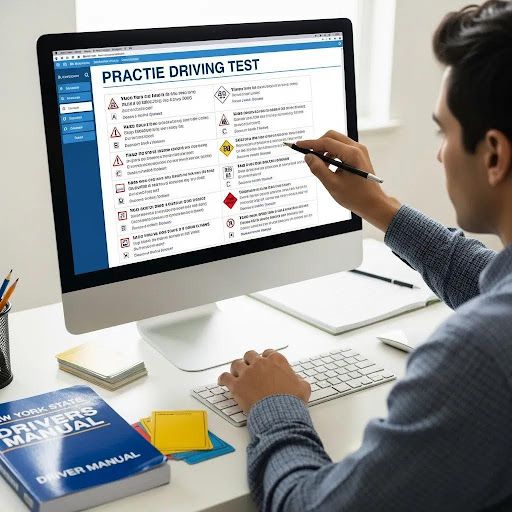
To prepare effectively, focus on road signs, traffic laws, safe driving practices, and frequent practice with NY-style questions so you become comfortable with the test format. Structure study sessions around the New York State Driver’s Manual, mix reading with short quizzes, and use timed practice tests to build pacing and reduce anxiety. The table below maps core topics to what’s tested and gives practical study tips you can put into action right away. After the table, follow the prioritized study steps to build a focused plan.
- Prioritize road sign recognition and the rules that most often appear on the permit test.
- Use short, repeated study blocks focused on one chapter, followed by a set of practice questions.
- Take full-length, timed practice tests weekly to simulate exam conditions and measure progress.
What Topics Are Covered on the NY DMV Practice Test Online?
The NY DMV written exam focuses on road sign recognition, traffic laws, safe driving principles, and situational judgment. Questions are usually multiple-choice and may include images of signs or diagrams of intersections, so studying the manual’s visuals is essential. Practice tests replicate these formats—sign images, scenario questions, and rule-application items—so regular practice reduces surprises and helps you transfer knowledge from study to test performance.
How to Use the New York State Driver’s Manual for Effective Study?
Make the Driver’s Manual your primary source: annotate chapters, summarize rules in your own words, and create flashcards for signs and point penalties. Read a chapter, then immediately do related practice questions to lock in what you learned. Focus first on areas that commonly appear on the test—right-of-way, speed limits, and sign meanings. Use spaced repetition for tougher topics and mix manual study with quizzes to turn rules into test-ready answers.
Can You Take the NY Permit Test Online? What Are the Options?
Online testing availability varies with NY DMV policy and the testing provider. Some programs offer remote proctoring while others require in-person testing at DMV offices or authorized centers. Remote proctoring usually requires a webcam, stable internet, and ID verification, and minors may face extra restrictions like needing a parent present or testing at an approved site.
Who Is Eligible for Online NY Permit Testing?
Eligibility for online testing depends on current NY DMV policy and the testing provider. Requirements usually include proof of age, residency, and identity verification, with added parental consent rules for minors. Some minors must take the test at an authorized location instead of fully remotely. Confirm eligibility early so you can choose the right testing path and meet any technical or supervision requirements before scheduling.
How Does the Online Permit Test Process Work in New York?
Remote or proctored exams typically follow a standard flow: schedule your slot, complete technical checks, verify identity with a proctor, follow testing rules during the timed exam, and receive digital confirmation of results. Common steps include pre-test system tests, showing your ID and test area on camera, and adhering to proctoring rules (no unauthorized materials or breaks). Practice in a quiet setup with a working webcam and microphone so the test experience is familiar and low-stress.
What Are the Post-Permit Steps to Get Your Full Driver’s License in NY?
Once you have a learner’s permit, the path to a full NY license includes completing supervised driving hours, finishing the required 5-hour pre-licensing course, and scheduling and passing the road test when you’re eligible. Supervised practice develops real-world skills—lane control, parking, defensive driving—while the pre-licensing course covers the safety topics you’ll need for the road test. Track these requirements carefully so you meet NY DMV timelines and documentation rules. The list below highlights the main milestones to keep on your roadmap.
- Log and complete the supervised driving hours required by NY DMV rules.
- Finish the 5-hour pre-licensing course and keep the completion certificate handy for your road test appointment.
- Schedule the road test, prepare the vehicle for inspection, and practice the maneuvers commonly evaluated during the exam.
What Is the 5-Hour Pre-Licensing Course Requirement in New York?
The 5-hour pre-licensing course—offered in classroom or approved online formats—covers essential safe-driving topics and must be finished before you schedule a road test. You’ll receive a completion certificate that proves eligibility. The course emphasizes hazard recognition, alcohol and drug awareness, and safe-driving techniques that align with road test expectations. Keep your certificate safe for submission when you book your road test. Completing this course helps you prepare practically and procedurally for the driving exam.
How Do You Schedule and Prepare for the NY Road Test?
To schedule a road test, make sure you’ve met supervised driving requirements and hold the 5-hour pre-licensing certificate. Choose a DMV test site and date, and prepare the vehicle (check lights, signals, mirrors, and brakes). Practice maneuvers like parallel parking, three-point turns, lane changes, and defensive driving with a supervising driver who can give constructive feedback. Arrive early with required documents and use calming techniques to manage nerves—common failures are caused by poor observation, unsafe lane changes, or loss of vehicle control. Target weak skills in practice and, if possible, rehearse routes similar to test conditions to increase your chances of passing.
What Should Parents and Guardians Know About Supervising New Drivers in NY?
Parents and guardians are key to a teen’s learning. Supervise and log practice hours, enforce passenger and nighttime restrictions for junior license holders, and create staged learning sessions that increase difficulty gradually. Start in quiet residential areas, progress to busier roads, then introduce highways and night driving under supervision. The checklist below helps structure sessions and track progress toward the road test.
What Are the Supervised Driving Requirements for Junior License Holders?
Junior license holders must complete the required supervised driving hours and obey passenger and nighttime restrictions aimed at lowering crash risk. Parents should confirm the exact hour requirements and allowed supervision methods under NY rules, then plan varied driving experiences—city, suburban, and highway—and keep a driving log. Enforcing restrictions and steadily increasing driving complexity helps teens develop safer habits and proves readiness when applying for the road test.
How Can Parents Support Teens Preparing for the NY Permit Test?
- Create a weekly practice schedule with clear skill goals and timed study blocks.
- Use practice tests and sign drills to isolate and fix weak areas identified in mock exams.
- Offer calm, constructive feedback after each drive to reinforce correct behavior.
About the Author
Sarah Jenkins
Who we are
Featured links
Get in touch
-
info@onlinetrafficsafety.com
Connect with us
-
Facebook
-
Twitter
-
Youtube
-
Instagram
-
Linkedin
-
TikTok