New York City Learners Permit: Complete Guide to Requirements, Testing, and Preparation
A New York City learner’s permit is the official credential that lets a new driver begin supervised behind-the-wheel practice and prepare for a full license. This guide walks you through who can apply, how to study, and what to expect at the NYC DMV. You’ll find clear explanations of age and consent rules for teens and adults, the specific documents commonly requested (including the MV-44 and the 6-point ID requirements), the written test topics and vision screening, and the local driving restrictions that matter in the city. If paperwork, city rules, or the test format are stressing you out, this article lays out checklists, study plans, and practical next steps to simplify the process. It also covers booking your DMV appointment, required pre-licensing steps, and how focused online permit prep can raise your chances of passing. Throughout, you’ll see concise action items, comparison tables, and study tips aimed at both teen and adult learners tackling the NYC permit test.
What Are the Eligibility Requirements for a New York City Learners Permit?
To get a New York City learner’s permit you must meet age and consent rules and bring the right documents the New York State DMV requires. Eligibility depends on minimum age limits, parental or guardian consent when needed, and proof of identity, New York residency, and Social Security status. You’ll also fill out the MV-44 application, complete a vision screening, and take the written knowledge test. Knowing these pieces up front lowers the chance your application will be delayed or returned and helps you collect everything before your DMV visit.
What Is the Minimum Age and Parental Consent Needed for NYC Learners Permit?
Age rules separate minors from adults: most applicants can apply at 16 with a parent or guardian’s consent, while people 18 and older apply on their own. For minors, parental consent usually means a signed MV-44 or other verification the DMV requires; completing driver education can open alternate pathways for under-18 applicants. These age rules also affect graduated licensing restrictions and any required pre-licensing courses. Knowing exactly what consent and age documentation you need helps families organize paperwork and book DMV appointments without surprises.
Which Documents Are Required to Apply for a NYC Learners Permit?Which Documents Are Required to Apply for a NYC Learners Permit?
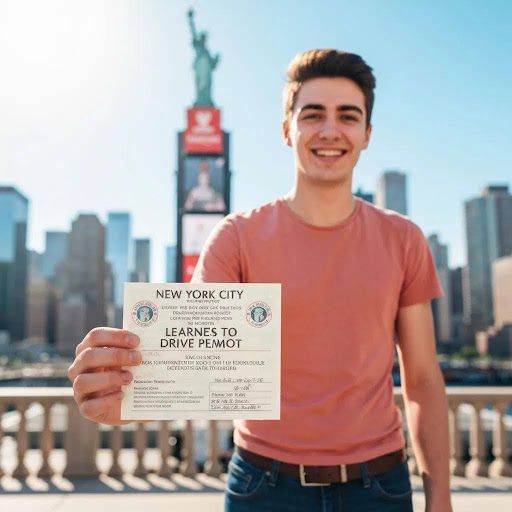
- A completed MV-44 application form, signed where required.
- Proof of identity and date of birth that totals six points under the DMV’s ID rule.
- Proof of New York residency and your Social Security number, or an accepted proof of ineligibility for an SSN.
How Do You Prepare for the New York City DMV Permit Test?
Preparing for the NYC DMV written test means following a focused study plan, learning the test format, and practicing under timed conditions so the actual exam feels familiar. The test covers road signs, traffic laws, and safe-driving practices with questions that reflect real-life city driving. Use the New York State Driver’s Manual, take structured practice tests, and watch short video explainers to speed comprehension and spot weak areas. A mix of reading, active quizzes, and simulated timed tests will build confidence before you sit for the DMV exam.
What Topics Are Covered on the NYC Learners Permit Written Test?
The written exam tests several topic groups important for safe driving in New York City and statewide. Expect questions on road signs and signals, right-of-way and traffic rules, speed and parking laws, and NYC-specific situations like bus lanes, ferry crossings, and bike-lane interactions. The test also covers safe driving practices, including defensive driving and impaired driving laws. Balance your study time across these topics and use mixed-topic practice exams to improve recall. Aim for steady practice-test scores above 80% before heading to the DMV.
- Core topics to prioritize before the permit test: Road signs and traffic signals. Rules of the road and right-of-way principles. NYC-specific driving points like parking rules and restricted roadways.
How Does the Vision Test and Online Testing Option Work in NYC?
The DMV administers a vision screening as part of the permit process to confirm you meet basic visual standards for driving; if you need corrective lenses, wear them and the DMV will note that on your permit. If you fail the screening, the DMV may ask for a report from an eye care professional. Some DMV permit testing options include online or remote testing depending on current policies — check eligibility and supervision rules before scheduling. Verifying vision and test options ahead of time avoids surprises on appointment day.
What Are the Driving Restrictions and Supervised Driving Rules for NYC Learners Permit Holders?
New York’s graduated licensing rules set limits on when, where, and with whom learner drivers may operate a vehicle, especially for those under 18. Typical restrictions include passenger limits, curfew hours for minors, mandatory supervision by an eligible licensed driver, and bans on certain high-speed roads or parkways. These rules reduce exposure to high-risk situations while new drivers build experience. Knowing who can supervise you and which restrictions apply helps families plan practice sessions and log required hours correctly.
This guide focuses on the NYC learner’s permit, but if you’re aiming for a professional driving path later, a Commercial Driver's License (CDL) requires specific training and testing.
Which NYC Driving Restrictions Apply to Learners Permit Holders?
Common NYC restrictions include night-driving curfews for minors, limits on non-family passengers for young drivers, and restrictions on certain roadways like parkways or other high-speed routes. Breaking these rules can lead to fines, points, or permit suspension. Examples are limits on late-night driving for drivers under 18 and restrictions on multiple teen passengers to cut distraction risks. Following the rules keeps your permit in good standing and helps you build safe driving habits.
How Many Supervised Driving Hours Are Required and Who Can Supervise?
New York State requires drivers under 18 to complete at least 50 hours of supervised driving, including 15 hours at night, before taking the road test. Completing an approved driver education course can reduce some required hours. Supervisors must be licensed drivers at least 21 years old and seated in the front passenger seat. Supervisors should model safe behavior and offer constructive feedback. Keep a clear log of hours and driving conditions (city intersections, permitted highway time, parking practice) to track progress and prepare for the road test. Regular, varied practice improves safety and the odds of passing.
How Can Online Traffic Safety’s New York Learners Permit Course Help You Pass?How Can Online Traffic Safety’s New York Learners Permit Course Help You Pass?
Online Traffic Safety’s NYC learner’s permit course supports self-paced study with interactive practice tests, concise video lessons, and quizzes that match DMV test topics. The course is built for flexible learning so NYC applicants can study signs, rules, and city driving scenarios on mobile or desktop. Interactive practice tests recreate DMV-style questions and timed conditions so you can build confidence and find weak spots before the official exam. Pairing official materials with structured online practice often improves preparedness and reduces the number of attempts needed to pass.
What Features Make the Online Permit Preparation Course Effective for NYC Residents?
The course combines short, focused videos with adaptive quizzes and mobile-friendly practice tests that reflect common exam formats and NYC driving realities. Practice questions mirror the New York State Driver’s Manual and highlight local considerations like parking rules and dense traffic. Progress tracking and immediate feedback point you to where to focus study time, and bite-sized modules encourage consistent daily practice — a pattern that boosts long-term retention. Those features translate into measurable readiness when students sit for the DMV written test.
How Do Practice Tests and Study Guides Improve Your Permit Test Success?
Practice tests copy the DMV’s exam format so you can practice pacing and spot common distractors. Repeated testing lowers anxiety and improves recall. Study guides break the Driver’s Manual into manageable sections and highlight the rules and signs most often tested, saving study time and focusing effort where it matters. A strong routine alternates short readings with timed practice questions, tracks progress, and waits to book the DMV exam until practice-test scores are consistently strong (for example, steady 80%+). This approach speeds learning and raises the chance of passing on the first try.
How Do You Schedule Your NYC DMV Permit Test and What Are the Next Steps?
To schedule your NYC DMV permit test, use the DMV’s appointment system to pick an office and date, bring the required documents and your completed MV-44 on test day, and complete vision screening and the written exam during the appointment. Arrive with originals for ID and residency verification and allow extra time for processing. Being ready with practice-test preparation reduces the need for repeat visits. After your learner’s permit is issued, log supervised driving hours, finish the 5-hour pre-licensing course if required, and prepare for the road test when eligible. Planning these steps—booking, study, supervised practice, and classes—creates a clear path to a full license.
How Do You Book a Permit Test Appointment at the NYC DMV?
Book early and be flexible about office location and times. Before you schedule, confirm which documents the DMV requires for your applicant type (minor vs. adult) and complete the MV-44 to avoid rescheduling. Choosing mid-week or early-morning slots often means shorter wait times. Bring backup copies of critical documents to the appointment. A little advance planning reduces stress and increases the chance you’ll finish the written exam that day.
What Are the Next Steps After Getting Your Learners Permit?
After you get your learner’s permit, focus on structured supervised driving, completing any required pre-licensing coursework, and preparing for the road test when eligible. Log varied driving experience — city traffic, allowed highway driving, and night driving under supervision — and pair practice with feedback from your supervising driver. Finish the 5-hour pre-licensing course if it applies to you, and set progressive practice goals before booking the road test. For extra support, use online practice tests and study modules to keep your knowledge sharp between getting your permit and taking the road exam.
Frequently Asked Questions
What is the cost associated with obtaining a New York City learners permit?
About the Author
John Smith is a seasoned traffic safety expert and certified driving instructor with over 15 years of experience specializing in New York State DMV regulations and driver education. As a lead curriculum developer for Online Traffic Safety, he has helped thousands of aspiring drivers navigate the complexities of the permit and licensing process. His expertise covers everything from age and consent rules to advanced road test preparation, ensuring learners are well-prepared for safe and responsible driving in urban environments like New York City.
Who we are
Featured links
Get in touch
-
info@onlinetrafficsafety.com
Connect with us
-
Facebook
-
Twitter
-
Youtube
-
Instagram
-
Linkedin
-
TikTok