New York State Learners Permit Test: Complete Guide to Requirements, Preparation, and Application
Getting a New York learners permit is the first official step toward driving on your own. Pass the permit test by studying the right material and following a clear plan — it’s a predictable outcome if you prepare smart. This guide covers who can apply, which documents to bring, and exactly how the written knowledge test works so you can study efficiently. You’ll get a step-by-step study schedule, links to authoritative resources like the New York State Driver’s Manual, and practical tips for exam day that raise your odds of passing. We also explain the Graduated Driver License (GDL) rules for under-18 applicants and walk through the DMV process so you know what to expect. If you prefer a structured, interactive option, we’ll introduce Online Traffic Safety’s Permit Preparation Course and show how its features map to NY topics and practice needs.
What Are the New York Learners Permit Requirements for 2026?
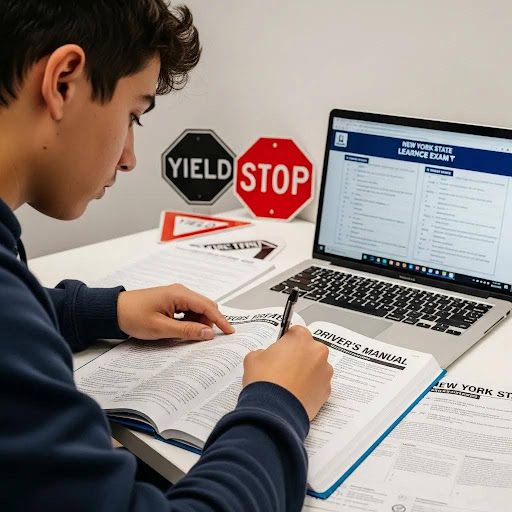
A New York learners permit confirms you’re eligible to start supervised driving. Before you can test, the DMV will verify three things: your age and residency, acceptable identity documents, and basic vision. Meeting these checks lets you take the written knowledge test and get a permit if you pass. Preparing the right paperwork ahead of your appointment cuts delays and lowers the chance of being turned away. Below we break down eligibility, required documents, and practical tips so your application goes smoothly.
Who Is Eligible to Apply for a New York Learners Permit?
Eligibility mostly comes down to age and New York residency, with some differences for older first-time applicants and non-citizens. In general, you must be at least 16 and a New York State resident to apply. Older first-time applicants follow the same documentation rules but aren’t subject to junior license restrictions. Non-citizen residents should bring immigration or identity documents that show lawful presence; temporary visitors should check DMV guidance for special cases. Practical examples — like a 16-year-old presenting a birth certificate plus two proofs of NY residency — help clarify which document combinations typically satisfy the DMV and prevent common mistakes.
Common eligibility checkpoints to confirm before applying: Proof of minimum age (for example, a certified birth record)Proof of New York residency (usually two documents)Social Security proof or a notarized statement if you don’t have an SSN
What Documents Are Required for the NY Learners Permit Application?
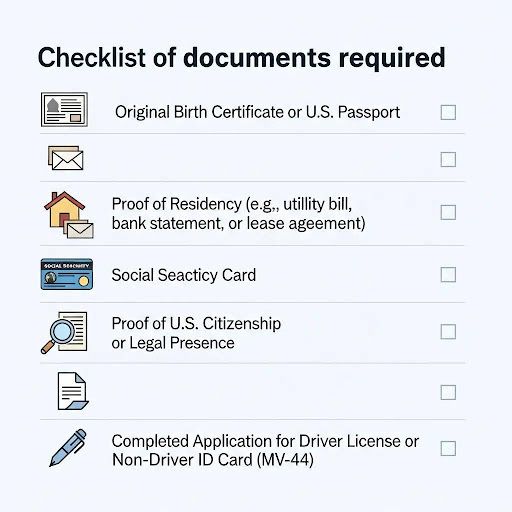
The application requires proof of identity and age, Social Security verification, and evidence of New York residency — exact document combinations determine acceptability. Bring primary ID that shows your legal name and date of birth, your Social Security card or an accepted alternative, and at least two documents that prove your NY address (school records, utility bills, or bank statements). Originals are expected; clerks may also request copies. You’ll take a vision screening at the DMV, so bring corrective lenses if you need them. If your vision doesn’t meet standards, you could be referred for additional testing. Keep all documents organized in one folder and review the DMV’s accepted-document list before your visit to avoid rescheduling.
How Do You Prepare for the New York State DMV Written Permit Test?
Effective prep means using the New York State Driver’s Manual, steady practice with sample quizzes, and a study schedule that targets signs, laws, and safe-driving habits. The test checks your knowledge of traffic signs, rules of the road, safe driving practices, and New York-specific regulations, so alternate reading with targeted practice and review of mistakes. Timed practice sessions simulate test pressure and reveal weak spots to focus on. Below we outline the test’s topic clusters, where to find official materials, and a study checklist to keep your preparation efficient.
What Topics Are Covered on the NY Permit Test?
The test covers traffic signs, rules of the road, safe driving practices, DUI laws, right-of-way, and basic speed-limit rules — a mix of recognition and applied scenarios. You’ll identify sign meanings, apply right-of-way and passing rules, and answer questions about seat belt laws, child restraints, and emergency responses. Studying in focused clusters — signs, rules, safety, procedures — lets you drill the areas that cause the most errors. Concentrate review on your weakest clusters, then retest with targeted quizzes to lock in improvements and boost confidence.
- Traffic Signs and Signals: Learn shapes, colors, and meanings.
- Rules of the Road: Understand right-of-way, lane use, and passing rules.
- Safe Driving Practices: Seatbelt rules, safe following distances, and emergency actions.
Where Can You Find Official NY State Driver’s Manual and Practice Tests?
The New York State Driver’s Manual is the definitive source and should be your study foundation, then reinforce it with practice quizzes and study aids. Read the manual for rules and definitions, then use practice tests that mirror the exam format to convert reading into applied knowledge. Free practice tests offer volume and quick feedback; structured courses provide lessons, analytics, and focused review. Use a mix: manual for facts, free tests for repetition, and a course for guided, data-driven improvement. The table below compares typical study resources and when to use each.
Start with the manual, use free quizzes to drill, and add a structured course when you want targeted progress — that layered approach builds knowledge and test readiness.
What Are Common New York Permit Test Questions and How Do You Pass?
The NY permit test is a short knowledge exam focused on core rules and sign recognition. Passing comes down to focused study and practice under exam-like conditions. Typical questions ask you to interpret signs, choose the correct procedure at intersections, apply speed and right-of-way rules, and handle situations with pedestrians and cyclists. To pass, aim well above the minimum on practice tests, review every missed question to learn the rule behind it, and simulate test timing to manage pressure. Below is a short checklist of exam-day tactics to help you succeed.
How Many Questions Are on the NY Permit Test and What Is the Passing Score?
The NY permit knowledge test is short and has a clear passing threshold. Typically the test has 20 questions and requires a 70% passing score — that means you should correctly answer at least 14 questions to pass. If you fail, retake policies usually allow another attempt after one day, so use any failed attempt as a diagnostic to refine your study plan. Aim for consistent practice scores in the mid-80s to create a comfortable safety margin for exam day.
Practice-target strategy: Aim for 85%+ on timed practice tests Review every missed question and the corresponding manual sectionRe-test after focused review to confirm improvement
Can You Take the New York Learners Permit Test Online?
Online testing options are limited and come with specific rules; most initial testing happens at a DMV or an authorized testing center. Where remote testing exists, it’s usually tied to pre-screening, identity verification, and follow-up in-person steps like vision checks or document validation. If you qualify for a remote pathway, confirm eligibility ahead of time and be ready for required in-person verification after completion. When online testing is available, practice on similar devices so you’re comfortable with navigation and timing.
- Confirm eligibility: Verify whether you qualify for remote testing.
- Prepare for verification: Expect in-person document and vision checks after online completion.
- Simulate the environment: Practice on similar devices to avoid technical surprises.
How Do You Apply for Your New York Learners Permit?
Applying for a New York learners permit follows a straightforward DMV workflow: gather documents, schedule or attend an appointment, complete vision and written tests, pay fees, and receive your permit. The DMV sequence verifies identity, checks eligibility, and confirms basic vision and knowledge. Knowing the order of steps and bringing the right forms shortens your visit. Prepare originals and a couple of copies so you’re not sent away. The numbered steps below outline the usual flow and how much time to allow for each part of the visit.
What Is the NY DMV Application Process for a Learners Permit?
Begin by collecting required documents, then submit your application at the DMV, complete a vision screening, and take the written knowledge test. First, bring identity, residency, and Social Security documentation (originals). Next, fill out application forms at the counter or via a pre-application if available. Then complete the vision test — bring glasses or contacts if you use them — and take the written test. Finally, pay the permit fee if you pass. Allow at least one to two hours for the full appointment, including any processing time or possible retakes. Plan travel time and potential delays so you can finish in one visit when possible.
What Are the Required Documents and Fees at the DMV?
At the DMV you’ll present the same identity, residency, and Social Security paperwork used to confirm eligibility, and you’ll pay the standard permit fee — accurate documents prevent delays or rejections. Fees usually cover application and processing; document requirements match the identity/residency checklist shown earlier. Bringing originals plus one or two copies speeds the clerical review. Payment methods vary by location, so bring multiple payment options if you’re unsure and confirm acceptable methods when you book your appointment. Arriving with organized paperwork and the fee ready helps you get on the road to supervised practice sooner.
What Is the New York Graduated Driver License Law and How Does It Affect Learners Permit Holders?
The New York Graduated Driver License (GDL) law moves new drivers through learner, junior, and full license stages to lower crash risk by adding phased restrictions. GDL requires supervised driving hours, passenger and nighttime limits for junior license holders, plus specific education and testing milestones that determine advancement. Understanding GDL timelines and restrictions is essential for under-18 applicants because noncompliance can delay moving to a junior license or lead to penalties. Below we summarize common restrictions and explain how driver education affects supervised driving requirements and permit status.
What Are the Restrictions for Junior License Holders Under the GDL Law?
Junior license rules limit unsupervised driving with passengers and during certain nighttime hours to reduce risk for new drivers; documented exemptions for work or school may apply. Passenger limits often restrict the number of non-family passengers for the first six months, and nighttime curfews commonly run from 9 p.m. to 5 a.m. unless you qualify for an exception. Breaking these rules can result in fines, tickets, or delays toward a full license, so know the exceptions and carry any required documentation. Reviewing these restrictions before moving from a learners permit to a junior license helps families plan supervised practice and required paperwork.
- Passenger limits: Limits on non-family passengers for an initial period.
- Nighttime driving: Curfew hours that restrict unsupervised driving.
- Exemptions: Documented work or school exceptions may apply.
These rules help reduce exposure to higher-risk situations while new drivers gain experience.
How Does the GDL Law Impact Eligibility and Permit Validity?
GDL rules set the required supervised driving hours, determine when a learner can apply for a junior license, and affect permit validity by enforcing training and testing milestones. You must log supervised driving hours per state guidelines to qualify for the next stage, and completing approved driver education can sometimes reduce required practice hours or shorten waiting periods. Permit validity can be affected by violations or failure to complete mandated steps, so keep organized records of logged hours and course completion. Knowing how coursework and logged hours interact with GDL timelines helps families plan a clear path to independent driving.
Why Choose Online Traffic Safety’s Permit Preparation Course for the NY Learners Permit Test?
Online Traffic Safety’s Permit Preparation Course bridges the gap between reading the official manual and passing the NY permit test by offering a structured, interactive path mapped to New York topics. The course is self-paced and flexible, using audio, video, and practice quizzes so you can study around school or work while turning manual content into active knowledge. Expert-curated lessons and responsive support help when topics get tricky, keeping you on track toward passing. If you want a clear plan, analytics to track progress, and targeted review tied to NY topics, this course is a practical complement to official materials.
How Does Online Traffic Safety’s Course Help You Pass the NY Permit Test?
The course aligns lessons and practice quizzes with the test’s core topics — traffic signs, rules of the road, and safe driving practices — and uses mock exams to simulate the testing experience. Instant feedback on quizzes explains each answer so you can learn from mistakes, and progress analytics highlight weak areas to focus on. Mock tests build timing familiarity, and lesson sequences develop concept mastery before assessment. By combining structured lessons, targeted quizzes, and progress tracking, the course gives a measurable path that increases the likelihood of passing on your first try.
What Support and Flexibility Does the Online Traffic Safety Course Offer?
Online Traffic Safety’s course is built for flexible access and learner support so students can study on their schedule and get help when they need it. Lessons are device-compatible and include multimedia content and interactive quizzes to reinforce retention. Dedicated support is available to clarify confusing rules or signs, preventing small misunderstandings from lingering. Self-paced modules let you revisit lessons and retake quizzes until you’re confident, while progress analytics guide efficient review sessions. This flexible, supported approach complements the NY Driver’s Manual and makes preparation more effective for busy learners.
- Flexible scheduling: Self-paced modules fit around school and work.
- Interactive learning: Audio, video, and quizzes improve retention.
- Support and analytics: Help and progress tracking target weak areas.
About the Author
This comprehensive guide was developed by the Online Traffic Safety Editorial Team, a collective of seasoned driver education specialists and traffic safety experts. With decades of combined experience in curriculum development, state DMV regulations, and practical driving instruction, our team is dedicated to providing accurate, up-to-date, and effective resources for aspiring drivers. We leverage our deep understanding of New York State's driving laws and testing procedures to ensure that learners are thoroughly prepared, confident, and safe on the road. Our commitment is to empower individuals with the knowledge and skills needed to successfully navigate the permit and licensing process, making us a trusted authority in driver education.
Who we are
Featured links
Get in touch
-
info@onlinetrafficsafety.com
Connect with us
-
Facebook
-
Twitter
-
Youtube
-
Instagram
-
Linkedin
-
TikTok